Project Portfolio
AI tools designed around real student career needs
Each project outlines the problem, product workflow, prompts, iterations, improvements, and technical stack, while also showing how I think about useful AI product design.
This section highlights the problem, workflow, example output, and reflection.
AI Resume Feedback Tool
One-line description: AI review tool that helps students turn underdeveloped resumes into clearer, stronger internship-ready materials.
What this visual shows
The mockup highlights a more complete coaching experience: section-by-section resume feedback, specific examples of weak wording, stronger rewrites with measurable outcomes, and a ranked list of what the student should fix first.
Problem
What issue are you solving? Many students submit resumes that are too generic, light on measurable impact, and difficult for recruiters to evaluate quickly.
Solution
What you built: A resume feedback application that scores sections, flags weak bullet points, and generates targeted rewrites.
My role: Designed the workflow, wrote prompts, built the evaluation rubric, and tested whether the feedback felt genuinely useful to students.
Tools: React, OpenAI API, prompt templates, deployed web prototype.
How it works
- Input: Student resume + target internship role.
- AI: Model scores clarity/relevance and rewrites weak bullets using constraints.
- Output: Improved bullets, section scores, and a prioritized fix list.
Example output
Before: “Worked on club projects and helped organize events.”
After: “Coordinated 4 club projects and 2 campus events, improving attendance by 35% through targeted outreach.”
Detailed feedback: “Your resume shows involvement, but it does not yet show enough impact. Phrases like ‘worked on’ and ‘helped’ are too broad, so a recruiter cannot quickly understand your contribution. The stronger version improves this by using a clear action verb, giving context, and adding a measurable result. To make the rest of the resume just as strong, focus on replacing passive language, adding numbers wherever possible, and prioritizing bullets that show leadership, ownership, or technical skill. The goal is not just to sound better, but to help the student present their experience with more confidence and clarity.”
Top recommendations: Quantify outcomes, shorten long bullets, move the most relevant experience higher, and tailor keywords to the internship description.
Result: Resume impact score improved from 5.8/10 to 8.1/10 in the prototype rubric.
AI workflow
Prompts
Iteration
Improvements
- Tested STEM and business resumes to reduce inconsistent feedback style.
- Added section-level scoring rubric to increase reliability.
- Added stricter rewrite constraints to reduce vague suggestions.
Reflection
What I learned / what I’d improve: Strong constraints make AI output significantly more useful. I also learned that students respond better when feedback explains why something is weak, not just how to rewrite it. Next, I would add ATS keyword matching and a side-by-side comparison view to support faster editing.
This section highlights the problem, workflow, example output, and reflection.
AI Job Description Translator
One-line description: Translates dense job postings into clear, student-ready requirements and practical next steps.
What this visual shows
The mockup shows a stronger interpretation workflow: the tool breaks down dense employer language, explains what the company is really asking for, identifies where the student already has evidence, and highlights the most important gaps to address before applying.
Problem
What issue are you solving? Students often misinterpret job descriptions and overlook key required skills before applying.
Solution
What you built: A translation tool that extracts job requirements, simplifies employer language, and creates a practical preparation checklist.
My role: Created the extraction logic and designed an output format that stays useful for students while remaining easy for recruiters or reviewers to follow.
Tools: React, Gemini API, classification prompts, structured JSON output.
How it works
- Input: Full job description text + student profile.
- AI: Extracts required/preferred skills and rewrites into plain language.
- Output: Skill checklist, gap summary, and 2-week prep plan.
Example output
Required skills: SQL, dashboarding, stakeholder communication.
Plain-language summary: “You need to analyze data, present findings clearly, and work with non-technical teams.”
Detailed feedback: “This posting is looking for more than technical ability. The employer wants someone who can turn data into decisions and explain those decisions to others. SQL is the technical baseline, but dashboarding shows they care about visual communication, and stakeholder communication means they expect you to present insights clearly to people outside a technical team. If a student only focuses on the software tools and ignores the communication side, they will miss a major part of what the role requires.”
Gap summary: “You already show communication strength, but your materials need clearer proof of analytical work. A strong next step would be creating a small dashboard project, writing two resume bullets around findings, and preparing one short explanation of your work for a non-technical audience. This helps the student understand not only what they are missing, but exactly how to close the gap in a manageable way.”
Action plan: 6 concrete tasks over 14 days (portfolio project, SQL practice, mock presentation).
AI workflow
Prompts
Iteration
Improvements
- Compared readability for first-year vs senior student profiles.
- Separated required vs preferred skills to reduce confusion.
- Added timeline-based next steps for better execution.
Reflection
What I learned / what I’d improve: Clear structure matters more than long explanations. I found that the most valuable output is the kind that reduces overwhelm and gives students a path forward. Next, I would add job-fit scoring and side-by-side role comparison across multiple postings.
This section highlights the problem, workflow, example output, and reflection.
AI Cover Letter Feedback
One-line description: Improves cover letters using role-specific context, stronger evidence, and revision guidance that feels actionable.
What this visual shows
The mockup frames the tool like a real writing review: generic claims are flagged, the revised paragraph is tied directly to resume evidence, and the student gets clear guidance on how to sound more credible, specific, and aligned with the role.
Problem
What issue are you solving? Students often write generic cover letters that do not align closely enough with the role or clearly use evidence from their resume.
Solution
What you built: A cover letter feedback tool that grounds revisions in resume evidence and aligns language with job requirements.
My role: Built the workflow, prompt routing, and quality-scoring checks, with a focus on making the feedback sound practical rather than robotic.
Tools: React, OpenAI API, response scoring rubric, deployed prototype.
How it works
- Input: Job description + student resume + draft cover letter.
- AI: Scores relevance/clarity and rewrites with evidence-based alignment.
- Output: Improved cover letter draft, confidence score, and revision notes.
Example output
Before: “I am excited about this role and believe I am a hard worker.”
After: “I’m excited to apply my project coordination experience from leading a 5-person team to deliver a campus analytics project ahead of schedule, and I would bring that same organized approach to this internship.”
Detailed feedback: “The original sentence sounds enthusiastic, but it is too generic to persuade a recruiter. Statements like ‘hard worker’ are common and do not prove fit on their own. The improved version works better because it replaces a vague trait with evidence, shows leadership through a specific example, and connects that example directly to the internship. Strong cover letters do not just express interest; they explain why the candidate is credible for this exact role.”
Revision guidance: Open with role-specific motivation, support claims with one or two concrete examples, and make sure every paragraph answers the question: ‘Why this company, why this role, and why you?’ The strongest letters feel personal, but they are still grounded in proof.
Result: Relevance score improved from 6.0/10 to 8.4/10 in internal evaluation.
AI workflow
Prompts
Iteration
Improvements
- Tested technical and non-technical roles for output consistency.
- Added grounding rules to block invented achievements.
- Added concise mode for strict character-limit forms.
Reflection
What I learned / what I’d improve: Grounding constraints are essential for trust and credibility. I also learned that students need feedback that sounds encouraging without becoming vague. Next, I would add plagiarism checks and recruiter-style feedback simulation.
A separate student-support website focused on debt awareness and financial guidance.
Additional student-support work: Student loan guidance website
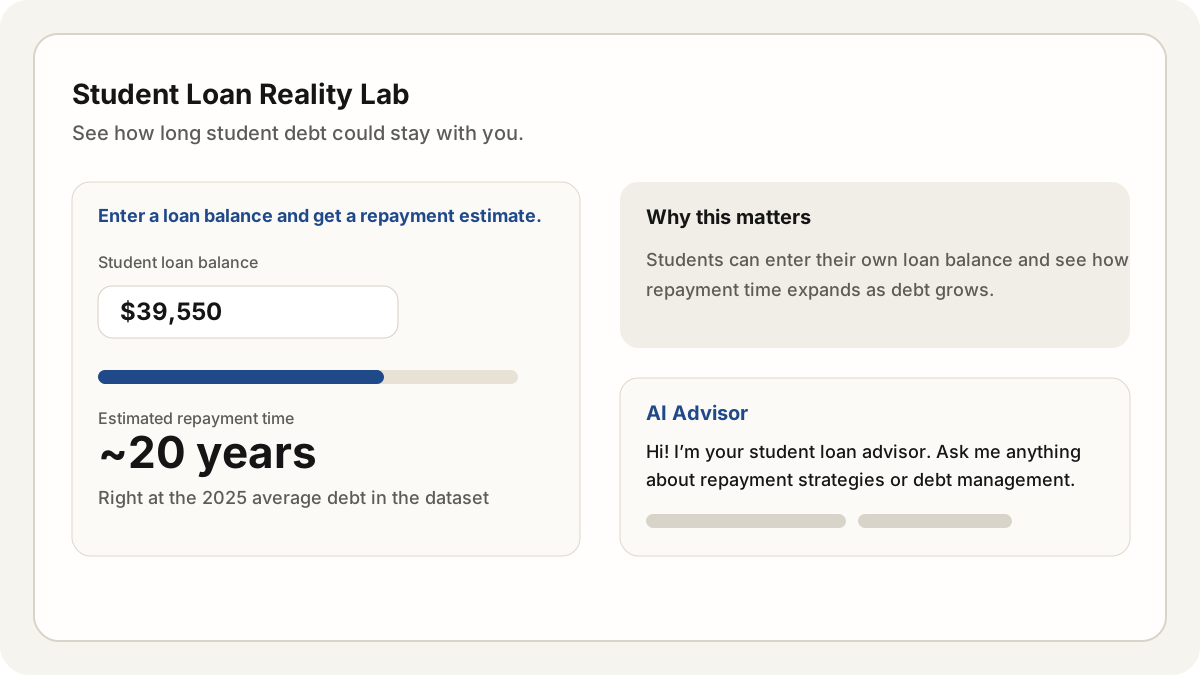
One-line description: Interactive student loan website that estimates repayment timelines through a simple, focused calculator.
Problem
What issue are you solving? Student debt often feels abstract, and many students do not understand how repayment timelines expand as balances increase.
Solution
What you built: A student loan estimator that turns debt ranges into a personal repayment estimate and shows how payoff windows expand as balances grow.
My role: Built the interactive estimator experience, explained the dataset clearly, and simplified the product around one focused student task.
Live website: Visit the student loan website